Source waterproof anti slip yoga bricks for Gym, Home, Office
Compare 30 listings of waterproof anti slip yoga bricks made from TPE, EVA, and NBR materials. Buyers can evaluate customization options, dimensions, and certifications for gym, home, and office use.
Key considerations
Products List






Comprehensive Sourcing Guide
Strategic Sourcing Guide for Waterproof Anti-Slip Yoga Blocks
The global demand for fitness equipment has driven a surge in the procurement of specialized yoga accessories, with waterproof anti-slip yoga blocks emerging as a critical category for both commercial gyms and individual retailers. Sourcing these items requires a disciplined approach that balances material science, safety compliance, and supply chain reliability. Buyers must navigate a complex landscape where product attributes like density, surface texture, and chemical composition directly influence performance and longevity. This guide provides a comprehensive framework for evaluating suppliers and selecting products that meet rigorous operational standards without relying on unverified marketing claims.
Technical Specifications and Material Composition
The foundation of a high-quality yoga block lies in its material composition and physical dimensions. Based on observed market data, the primary materials utilized in this sector include TPE (Thermoplastic Elastomer), EVA (Ethylene-Vinyl Acetate), and NBR (Nitrile Butadiene Rubber). Each material offers distinct advantages regarding density, weight, and tactile feel. For instance, specific product observations indicate a density range of 0.18 to 0.35g/m³, which is a crucial metric for determining the block's buoyancy and structural integrity during use.
Dimensions are equally critical. Standard configurations frequently observed in the market include 3''x6''x9'' and 4''x6''x9'' formats. However, customization is a prevalent feature, with suppliers offering "Custom Thickness" and varying size codes such as S, XL, L, and XXL. When evaluating technical specifications, buyers should verify the surface tolerance, which is observed to be around ±0.3mm in high-precision manufacturing. This tolerance ensures that the block remains flat and stable, preventing uneven weight distribution that could lead to injury.
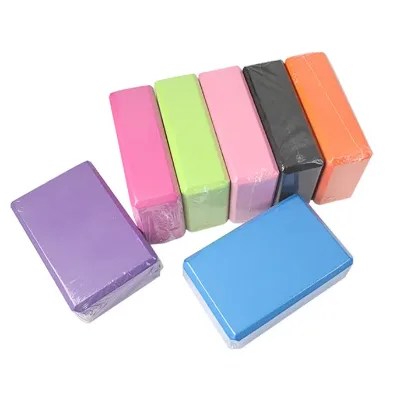
The working temperature range is another vital technical parameter. Products designed for diverse environments, including outdoor use or heated studios, must withstand temperatures from -40°C to 120°C. This range ensures the material does not become brittle in cold conditions or deform in high-heat scenarios. Additionally, the color options observed, ranging from Pink, Purple, Orange, and Green to Black and Blue, are often solid colors, though customized color requests are available. Buyers should confirm that the coloration is integrated into the material rather than applied as a surface coating, which could peel or fade over time.
Compliance and Certification Verification
In the B2B procurement of fitness equipment, verifying compliance with international standards is non-negotiable. The supply chain for yoga blocks often involves complex manufacturing processes where chemical safety and fire resistance are paramount. Observed certification data indicates that reputable manufacturers may hold UL94 for flammability, alongside ISO9001 for quality management, ISO14001 for environmental management, and IATF16949 for automotive-grade quality systems, which often translates to high standards in other manufacturing sectors. Furthermore, ROHS compliance is frequently cited, ensuring the product is free from specific hazardous substances.
Buyers must treat these certifications as evidence of a supplier's commitment to safety rather than as automatic guarantees for every SKU. The presence of a certification mark should be cross-referenced with the specific product batch. For example, while a supplier may hold ISO9001, the specific yoga block model (e.g., Yoga Block-1 or WSFD078) must be verified to ensure it was produced under that certified system. The "Uniform code" standard mentioned in some product listings suggests a need for standardized identification, which aids in traceability.
When assessing compliance, procurement teams should request valid certificates directly from the supplier rather than relying on third-party descriptions. The origin of the product, often listed as Guangdong, China, or Shanghai China, can influence the regulatory framework applied. Products originating from Fujian, China, may also be subject to specific regional export regulations. It is essential to verify that the "High Quality" claims are backed by these documented standards, particularly regarding the "Eco-Friendly" attributes often associated with TPE and EVA materials.
Cost Drivers and Pricing Dynamics
Understanding the cost structure of yoga blocks is essential for budgeting and negotiation. The observed price range in the market spans from $0.49 to $4.00 USD per unit. This wide variance is driven by several factors, including material type, customization level, and order volume. The Minimum Order Quantity (MOQ) typically ranges from 50 to 1000 units, with larger orders often securing better unit pricing.
Material selection is a primary cost driver. NBR foam is generally more durable and offers better grip but may be more expensive than standard EVA. TPE, often marketed as eco-friendly, can command a premium due to its recyclability and non-toxic nature. Customization adds significant cost; features such as custom logos, specific color requests, and tailored packaging (e.g., "Customized Packing" vs. standard "Carton") increase production complexity and unit price.
The "Single package size" and "Single item" selling units indicate that some suppliers offer low-volume sampling, which can be useful for quality testing but less cost-effective for bulk procurement. Buyers should analyze the total landed cost, including shipping and duties, rather than focusing solely on the FOB price. The "Capacity" of a supplier, observed at 500,000 units, suggests that larger manufacturers can offer more competitive pricing due to economies of scale, whereas smaller suppliers may have higher per-unit costs but offer greater flexibility in customization.
Typical Applications and Usage Scenarios
Yoga blocks are versatile tools designed for a wide array of applications, extending beyond traditional yoga practice. The primary usage is for "Yoga Exercises," providing support, stability, and alignment assistance. However, the product attributes indicate a broader application scope, including "Gymnasium, Outdoor, Office, Home, and Yoga Sport." This versatility makes them suitable for physical therapy clinics, pilate studios, and even corporate wellness programs.
The "Waterproof" and "Durable" features are particularly relevant for outdoor use or in humid environments like public swimming pools or beachside fitness centers. The "Anti-slip" characteristic is critical for safety, ensuring that users maintain grip even when sweating. The target demographic includes both "Children" and "Adults," as well as "Women," suggesting that product sizing and weight (observed at 890g for some models) must be appropriate for different user groups.
When sourcing for specific applications, buyers should match the product specifications to the environment. For instance, blocks intended for outdoor use should prioritize the -40°C to 120°C working temperature range and UV resistance. For office or home use, the focus might shift to aesthetics, with "Solid Color" options and "Customized Logo" availability being more important. The "Type" of product, often categorized as "Yoga & Pilate," confirms its suitability for a wide range of fitness disciplines, making it a high-demand item for retailers serving the general fitness market.
Supplier Evaluation and Selection Criteria
Selecting the right supplier requires a multi-faceted evaluation process that goes beyond price. Buyers should assess the supplier's production capacity, which has been observed at 500,000 units, indicating the ability to handle large-scale orders. The "Place of Origin" is a key factor; suppliers from Guangdong and Shanghai are known for established manufacturing ecosystems, while those from Fujian may offer different logistical advantages.
The "Customization" capability is a major differentiator. Suppliers offering "Custom Logo" and "Customized Packing" provide greater value for brands looking to differentiate their products. However, buyers must verify the lead times associated with these customizations. The "Selling Units" being "Single item" suggests flexibility for small orders, but the MOQ range of 50-1000 units sets the baseline for bulk purchasing.
Reliability is often reflected in the "Quality" attributes listed as "High Quality." Buyers should request samples to verify the "Surface tolerance" and "Density" claims. The "Brand Name" associated with the product, such as "Silicone Chain," should be checked for reputation and consistency. It is also important to verify the "Product Type" and "Model Number" (e.g., JLY-YB001, MB-76018) to ensure the specific item matches the intended use case. A supplier's ability to provide consistent "Uniform code" labeling and accurate "Single package size" documentation is indicative of a well-organized supply chain.
Quality Control and Long-Term Procurement
Implementing a robust quality control (QC) protocol is essential for maintaining product integrity over time. The "Process" attribute, specifically the "Surface tolerance" of ±0.3mm, serves as a baseline for dimensional accuracy. Buyers should establish QC checkpoints that verify the "Material" consistency, ensuring that the TPE, EVA, or NBR composition matches the agreed specifications. The "Color" consistency, whether solid or customized, must be checked against standard color swatches to prevent batch-to-batch variation.
Long-term procurement considerations involve building a relationship with suppliers who can maintain quality over multiple production runs. The "Feature" of being "Waterproof" and "Durable" must be validated through repeated testing, especially if the blocks are subjected to frequent cleaning or exposure to moisture. The "Working temperature" range should be tested to ensure the blocks do not degrade under extreme conditions.
Buyers should also consider the environmental impact of their procurement. With "Eco-Friendly" features being a key attribute, suppliers who utilize recyclable materials and adhere to ISO14001 standards are preferable. The "Certification" status, including UL94 and ROHS, should be reviewed annually to ensure continued compliance. Finally, the "Wight" (Weight) of the product, observed at 890g for certain models, should be consistent to ensure predictable shipping costs and user experience. By focusing on these technical and operational details, buyers can secure a reliable supply of high-performance yoga blocks that meet the demands of the modern fitness market.
Comparative Analysis of Product Attributes
To assist in decision-making, the following table summarizes key attributes observed across different product models, highlighting the variability in specifications that buyers must navigate.
| Attribute | Observation Range / Specific Values | Procurement Consideration |
|---|---|---|
| Material | TPE, EVA, NBR | Verify density (0.18-0.35g/m³) and eco-friendliness claims. |
| Dimensions | 3''x6''x9'', 4''x6''x9'', Custom | Confirm surface tolerance (±0.3mm) and size codes (S, XL, L). |
| Temperature | -40°C to 120°C | Essential for outdoor or heated studio applications. |
| Certifications | UL94, ISO9001, ISO14001, ROHS | Verify specific model coverage; do not assume blanket coverage. |
| MOQ | 50 - 1000 Units | Align order volume with budget and storage capacity. |
| Price Range | $0.49 - $4.00 USD | Factor in customization costs and shipping. |
| Origin | Guangdong, Shanghai, Fujian, China | Assess logistics and potential regional quality variations. |
| Customization | Logo, Color, Packing, Thickness | Confirm lead times and minimums for custom orders. |
| Weight | 890g (Observed specific) | Check consistency for shipping and user experience. |
| Application | Gym, Home, Outdoor, Office | Match product durability to intended usage environment. |
This comparative view underscores the importance of detailed specification verification. While the core keyword "waterproof anti-slip yoga bricks" defines the functional requirement, the specific attributes listed above determine the suitability of each supplier's offering for a particular business need. By rigorously applying these criteria, buyers can mitigate risk and ensure a successful procurement outcome.
FAQs
What materials are used for waterproof anti slip yoga bricks?
These blocks are primarily made from TPE, EVA, and NBR materials. The observed density ranges from 0.18 to 0.35g/m³, ensuring structural integrity and buoyancy for various yoga exercises and gym equipment applications.
Which certifications verify the safety of these yoga blocks?
Reputable manufacturers often hold UL94, ISO9001, ISO14001, IATF16949, and ROHS certifications. These standards confirm fire resistance, quality management, and environmental compliance for products originating from China.
How do dimensions affect the stability of yoga blocks?
Standard sizes include 3''x6''x9'' and 4''x6''x9'' formats with a surface tolerance of ±0.3mm. Custom thickness options are available to ensure flat surfaces that prevent uneven weight distribution during use.
Can these blocks withstand extreme temperature conditions?
Yes, the working temperature range spans from -40°C to 120°C. This ensures the blocks remain durable and do not deform in heated studios or become brittle in cold outdoor environments.
What is the typical price range for bulk orders?
The observed price range is between 0.49 and 4 USD per unit. Costs vary based on material selection, customization levels, and order volume, with MOQs typically ranging from 50 to 1000 units.
Which customization options are available for branding?
Suppliers offer custom logos, customized packing, and specific color requests like pink, purple, or orange. Customization adds complexity but allows brands to differentiate their products in the competitive fitness market.
Where are these yoga blocks typically manufactured?
Products originate from locations such as Guangdong, Shanghai, and Fujian in China. These regions host established manufacturing ecosystems capable of handling capacities up to 500,000 units for large-scale procurement.